This story is dedicated to the Wilbur family.
What follows is based on a true story. Many of the details are factual, but some of the original story has been lost to history. I felt honor bound to truthfully put narrative to the facts we know, while taking liberties in telling a greater story that we can only imagine.
This is my dad's story as if it were told by Ervie himself.
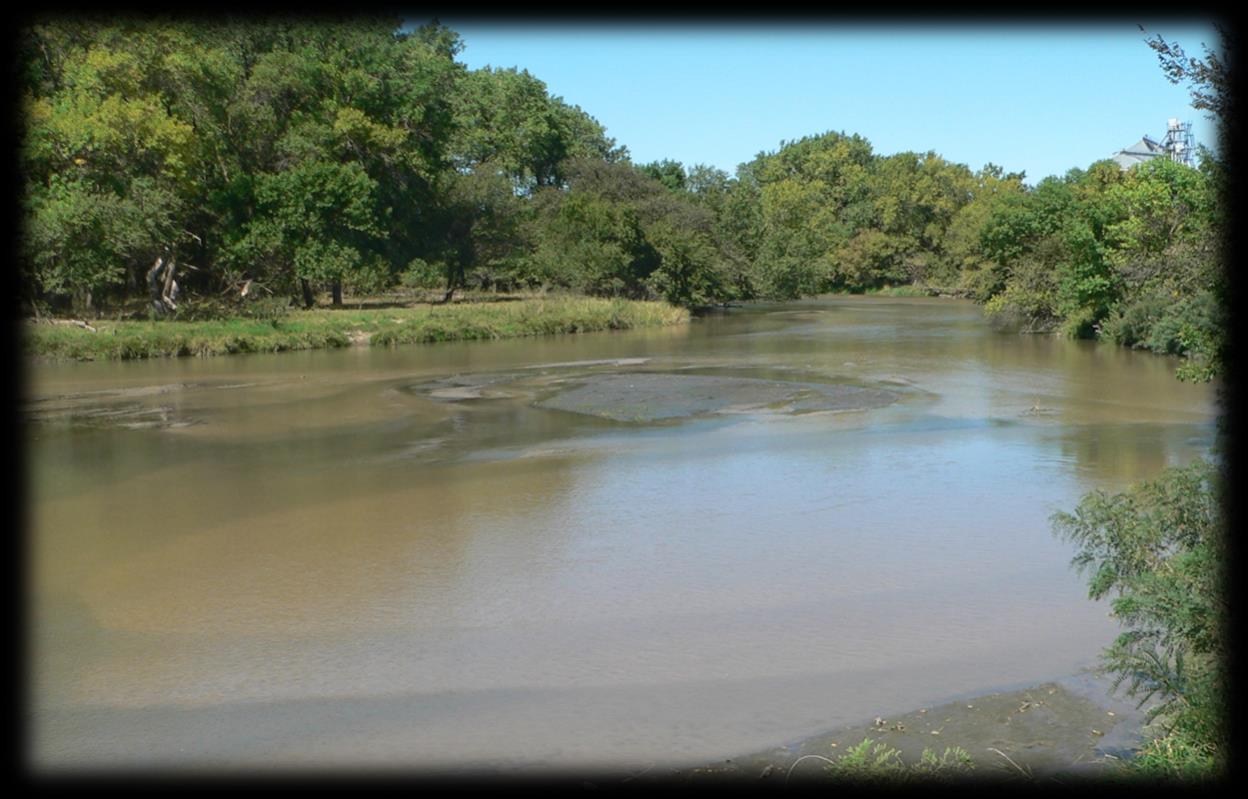
The Cedar River near Belgrade, Nebraska
My dad used to sing little ditties when I was a boy. They were all my favorites. Dad wasn't much of a singer, but he sure seemed to like to do it. We would be somewhere and he'd just start singing and I wouldn't know what to say so I'd just keep my mouth shut and pretend that I didn't hear anything. I learned that as a young'un. When I was just a little kid, I would say things and sometimes I'd get my ears boxed over it. After those first three years of growin' I always respected my dad. He beat that in to me. I sometimes wonder if he respected himself much in those days, though. He always had kinda a scowl on his face when I was a young boy, like he ate something that disagreed with him terrible and his face couldn’t hide it.
I think my uncle Bill Harms taught dad some of the songs I heard him sing. Some were German and I couldn't make out the words much but dad sure lit up when he started one up, and mother loved to hum along. She remembered many of the German songs from when she was a child and her family would sing them.
The earliest I remember was when I was 3 or 4. Mother had made up a big batch of preserves of some fruit from one of our trees at the farm in Belgrade. Dad was kinda mad about it, I think because Mother made up applesauce and dad always liked to save the few apples on that poor ol’ tree for the horses. I guess he figured that the horses worked hard and deserved a treat or two, even though we all worked hard on the farm in the 1910s and 1920s but there weren't no treats to go around for any of us.
Mother had finished boiling the mason jars to seal ‘em and had just asked dad to lift ‘em off of the big stove when dad let fly with a mouthful of cuss words that made the air turn blue.
"Goddam it, Rickie. What the hell are you doing," he bellered. "Make them kids do some of that goddammed work. I can't get my own goddammed work done fer chrissakes."
Then he begun to spit and sputter and kick things and all I could think of to do was run. For all my life I never much liked being around people with tempers and I figure that dad’s temper probably was what set me off in that direction, from what I remember.
Harold was just a little kid, barely done pooping in his nightclothes at the time.
Mother just answered, "Okay, Chance, we'll see what we can do." And that was that. Nothing was ever seen to, and dad knew better than to press the point.
Mother was the strongest, most gentle person I ever knew. She worked in the fields alongside dad. She could make a team do whatever it needed to do, giving 'em hell when they wasn't following her lead, yelling, "Gehen!" and jerking hard on the traces. But I often saw her pick up a little chick and hold it tenderly, speaking soft and sweet to it, cooing over it like it was her own child.
Mother wore a big apron all of the time, which she would use to gather eggs or hide her boys when dad was on one of his rants. When I was a little boy, if I got hurt, or dad had smacked me across the face, Mother would grab me in her apron and hold me and speak with that same gentle mother's voice so I would know that everything was going to be alright as much as she could see to it.
We farmed wheat and some corn on a little farm about 5 miles outside of Belgrade, Nebraska, just a field or two upland from the Cedar River. I remember the house so well. It was a two story house sitting up a little higher than the surrounding land, although on the side of a hill, rather than at the top.
Farming along the river wasn't all that predictable. Some years the rains would come in spring and raise the river up till it crested, drowning half of our land. It was a lesson in enduring the event instead of fighting it or trying to prevent it. You couldn’t do anything about the weather except smile when the sun shone and duck for cover when it started dumping raindrops or hail. A few weeks after the crested river had fallen back, revealing the land, Dad would hitch up Dakota, Billy, Joe and Pie to the plow and start all over, turning over the dark earth like it was some failed experiment that needed to be hid. Plowing was hard work, yet Dad always seemed to be in a good mood when he was with the horses, singing some song that came to him while he walked behind the plow, traces firm in his hands.
I guess we were poor, but those were years when everyone was poor except bankers and railroaders. The War to End All Wars had been fought and won but that ended the sale of horses that kept our family afloat during the lean crop years. We heard that some folks out west were doing okay, but the way people talked you couldn't be sure what was truth and what was hay after it passed through the horse.
I started school the year I turned six. Mother walked me to the schoolhouse every day that first week. I was the firstborn so I was the first to go to school and I was happy and proud all at the same time. Going to school meant I was growing up, I was a big boy. I was so happy to have Mother walk me there. Our teacher Miss Doerr would be standing at the door when we arrived, ringing that bell like it was going to save the world, and us kids would pile in quick like bunnies so she wouldn't swat us on the way in. She was a funny lady. Her face would be all squirreled up as she held the rope to the bell in one hand and a switch in the other. If you didn't step to it as you walked into the classroom you could get a few red marks on your legs that weren't there the minute before.
I liked school. The kids in my school were all ages mixed in, all sitting on chairs in that one room schoolhouse in Belgrade while Miss Doerr gave us our lessons. I wasn't much for spelling or numbers, but I found out that I liked to learn about history and I could read and write okay. Miss Doerr said I had a nice smile, which no one had ever said to me before. That made me pretty happy and the day she said that was surely the happiest day of that year.
History was interesting to me. Mother told me about growing up and about what she had learned about the Old Country from her family, but Miss Doerr told us about Abe Lincoln and the Civil War. There were Civil War veterans living around us and all the folks from the farms and little towns near us would get together in Belgrade on July 4 and have a parade and the veterans would march in the parade all proud like. We didn't know much about why there was such a big fuss or what veterans actually did, but Miss Doerr gave us lessons on the war between the states and how Nebraska helped win that war. I had heard that I had a great grandfather that had served with the 1st Nebraska.
The first six years of school were okay, but as I grew dad gave me more things to do and there were always more opportunities to let him down than anything else. Of course, like any young boy I wanted to make him proud and happy with me but I don't think those two conditions were in his nature. Once Harold and I were both in school it seemed like we were always getting a licking for something or another. We both tried hard as if hard trying was going to be the answer, but neither of us had any idea what question we were trying to answer. It was hard going.
The farm wasn't doing too good. One year we got washed out by a flood, the next year was drought. Then there was one year when crops were doing good and it looked like we were going to do real fine. As we sat down to dinner one day as fall approached, dad and us boys had spent the morning getting everything ready for the approaching harvest, Mother was standing at the window when she let out a loud gasp. "Mein Gott!," she exclaimed. Dad was at the door before she could say anything else, yelling for us to grab brooms and blankets or anything we could find, and get out to the fields. I never saw anything like what was coming on the wind. As I stepped out the door with Harold right behind me, I looked up at the sky which was about as dark as you could get in the day. There was a huge cloud that filled the entire sky, and it was coming right toward us. We ran past the barn and out into the closest field just as the first wave of grasshoppers dropped out of the sky and landed in the wheat. It sounded like a steady wind rustling through the wheat as wave after wave of big locusts landed and began chomping away our future. I watched my dad flailing like a man possessed, swatting and beating the invading insects, screaming at them with words I never heard before or ever hope to again. Mother had her apron swirling around her head as the apron of mercy changed into a weapon of war, catching the flying critters and flinging them to the ground. We fought them for hours, never advancing much against the marauding hordes, but determined to yield no new ground. When the sun set we crawled back into the house, exhausted, to the goodbye serenade of millions of mandibles chewing the lifeblood of our farm. Dad's scowl was a brooding ugly scar on his forehead. Harold and our little brother Walt and I hid in our room that night. As tired as she was Mother somehow managed to fix some supper and bring it to us. "You boys stay here and don't come downstairs until after your father has gone to the fields in the morning," she said with a motherly glance. We did just what she said. I was ten.
Life on the farm seemed like the mercury in a thermometer. It went up and it went down. You always worked hard and sometimes you were rewarded, but mostly we felt like victims of some cosmic vendetta against the Wilbur family.
When I was 11 I was hired out to one of the neighbors to work. We needed the money. I milked cows in the early morning before going to school, getting up at four to have a little breakfast with the farmer and his wife. They didn't have any children and were in real need of help because farming needed manpower to make it work.
I worked the farm in the morning and after school, trying to keep up with my schoolwork all along. It was hard going. Most nights I was tired and slept but some nights as I got drowsy but just before I went to sleep there would be a song in my mind. Music was my company and the sound of my voice as I sang out loud was my friend.
"Ha ha ha, you and me. Little brown jug don't I love thee"
It's a simple song, but them's the ones you can't get out of your head.
I saw my brother Harold and sister Virgie every day at school, and sometimes my little brother Walt, but mostly I just listened to Miss Doerr telling us about the world inside and outside Nebraska.
The farm where I was hired out to was small but there was still plenty to do. Even though Mr. Svensson was a hard working farmer he still couldn't keep up with the work. Mrs. Svensson was sickly and I think that weighed on her husband. I did my best to work hard because the money I earned was helping mother and dad and the other kids. In a way I felt proud again for doing my part. In 1922 there weren't no great jobs for 11-year old kids in eastern Nebraska except to work on your family's farm or get hired out, but somehow we were doing okay.
After two years working on the Svensson farm I graduated eighth grade and had just started high school when a horse rolled over on me on the farm and I was laid up for a few weeks. Once I went back to school I couldn't catch up to what we was supposed to be learning, and the school was now about a half hour's ride from the farm, so I just threw in the towel on school and focused on farming.
Looking back I can say I was passable at farming, but not passionate about it. Truth be told, I just didn't much like it. By this time I was 14 and I had been working on farms in some way or another for more than 10 years, through chores on our farm or employment to Mr. Svensson. I could see that I could do farmwork but I couldn't see much of a future for me in it.
At 18 I took some time out from work to help mother and dad and the kids move to Grainton in western Nebraska. They was trying to find a way to make a go of it and dad thought western Nebraska would be better farming. I was glad to see everyone so excited even though I wasn't going to be part of those next few years. We made the hard move with wagons, me driving one team, mom driving a second and dad driving another. We divided kids, food and belongings up over the three wagons and made the trip in a little over four days. As we slept under the stars I dreamed every night about traveling, taking a team and wagon and heading west, following the trails that many wagon trains had traveled 80 years before, coming through Nebraska. There was still folks that told the tales of crossing the land that way.
The year 1930 I turned 19 Mrs. Svensson died and Mr. Svensson sold everything and lit out for Wyoming and since I didn’t have any better prospects, I went with him. It was a new decade and I was ready for a change. Svensson had bought a small ranch on a low down and we set to work. I guess I could say that ranching didn't suit me any better than farming. Oh, I did it. A man's gotta eat and I was a strong man growing into my skin. I needed a lot to eat. And man did we eat meat. We were raising sheep and cattle and goats, and I can tell you that all them were pretty good if you cooked 'em right. We burned 'em and fried 'em and boiled 'em; we did everything except make 'em up like cereal. No matter how we cooked 'em they tasted good.
We were on a nice little spread that had a barn, a small house, and 75 acres of grazing land, all fenced. Mr. Swensson was trying to be a rancher, which in many ways is a far cry from farming, with of course the common ingredient to both being land. It was not an easy change to make.
My life now was filled with hard work, working with my hands and muscles, putting in long hours, not getting enough sleep and even carving out enough time to meet girls. This last carving was done with real happiness because girls were, to my mind, about the finest creation on earth.
The ranch was about 20 miles outside of Riverton, a town of about 1600 in the middle of the Wind River Valley, home to the Wind River Indian Reservation. I had heard stories about run-ins with Indians in Nebraska from my dad and grandad, and I wasn’t too sure about how things would work out here. A few times I was able to borrow a horse and ride into town for a dance or maybe just for a look-around. The girls in town was pretty and it got pretty lonesome out on the ranch with just me and another ranch hand, and ol’ Mr. Svensson.
I would spend almost all of the Depression on that ranch, eventually moving to Spokane for work after Mr. Svensson died, and then on to Oregon.
I tried my hand at many things in life. Some were good, some were not as good. People search for many things in life, and I was in search of the answers to my life. Why was I here? What was I supposed to do? What did my future hold?
No answers ever came to my questions, but the songs in my head and heart always lifted my spirits, lightening any burdens, and giving me hope.
I guess if you were to look at what kept me going for the almost 83 years of my life it was that one human quality, hope. The words to I’m Forever Blowing Bubbles, a song that I sang often throughout my adult life, said it this way:
“I'm dreaming dreams, I'm scheming schemes,
I'm building castles high.
They're born anew, their days are few,
Just like a sweet butterfly.
And as the daylight is dawning,
They come again in the morning!”
From what I’ve seen, most people just go through life the best way they can. Life can seem pretty unfair at times. You can get knocked down. You can sometimes see problems that aren’t there. But I learned that that even on cold, gray, snowy or rainy days the sun is shining above the clouds, and if you are patient and expectant it will come up again tomorrow.
Keep a song in your heart for when you need it.
And keep forever blowing bubbles.
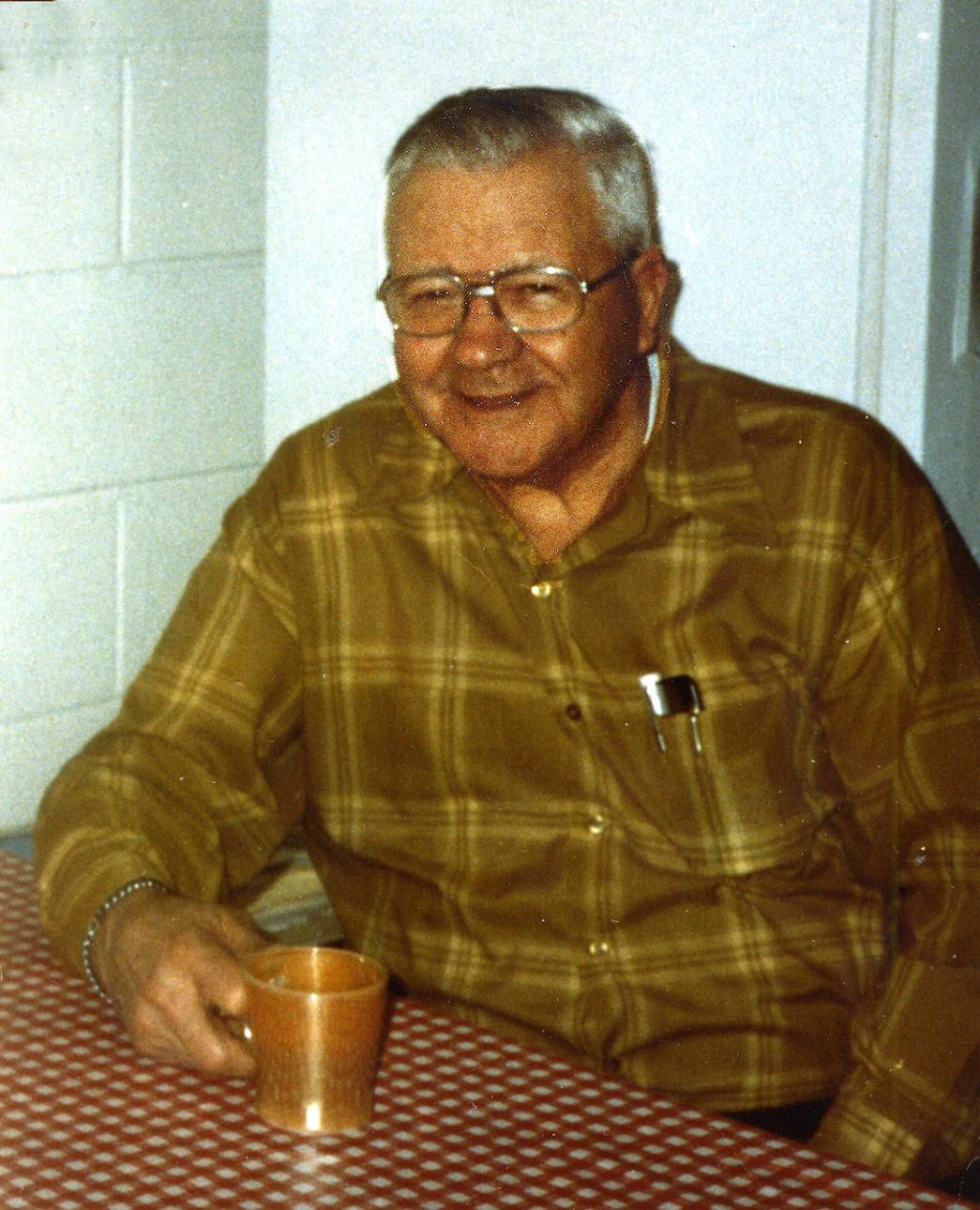
Ervan Wesley Wilbur 1911-1995 Left this life one month shy of his 84th birthday